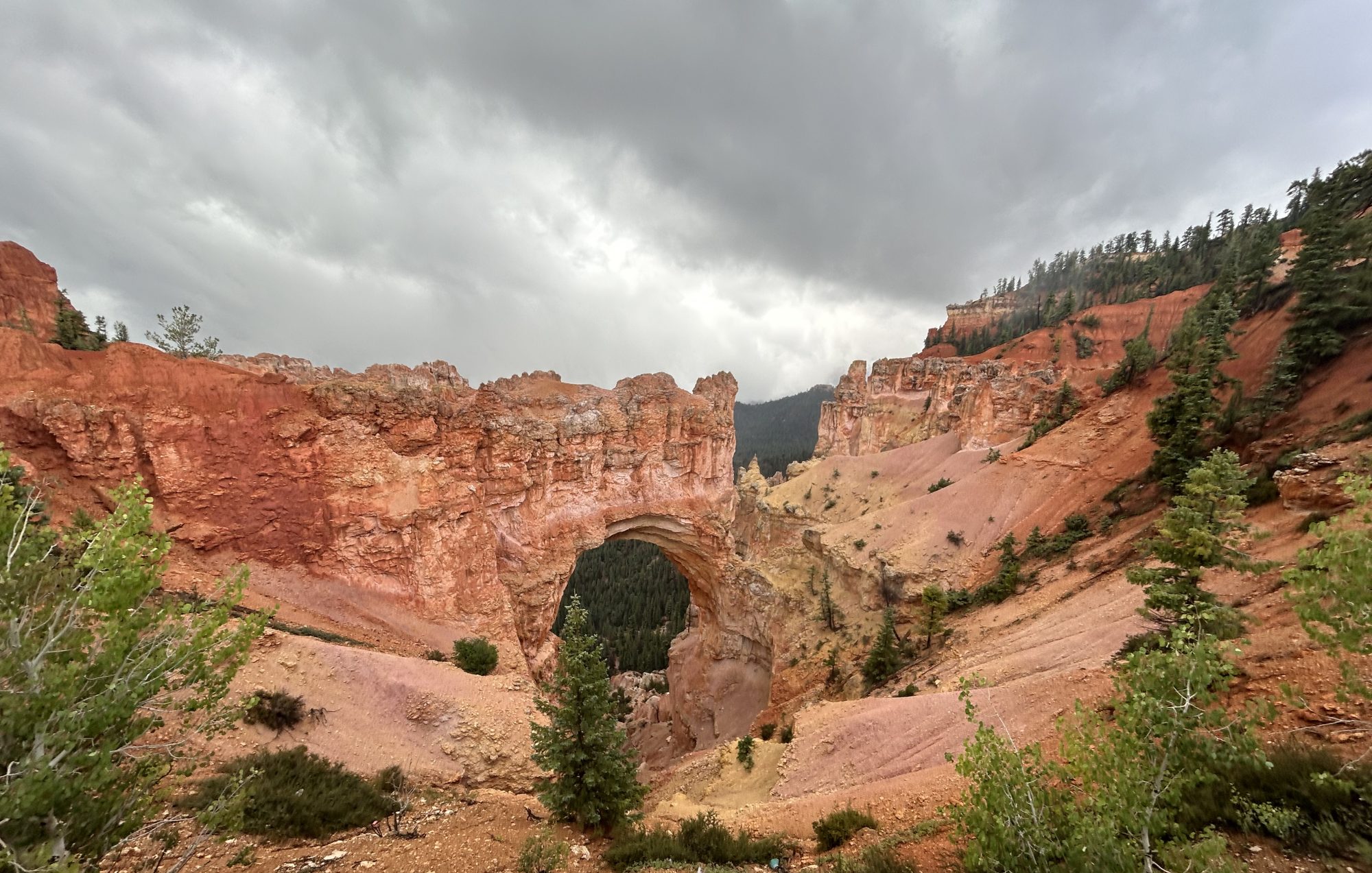
National Park Roundup: Exploring Zion with my Dog

Recap: I explored Zion National Park with my dog, drove the scenic roads, and was tempted to join the boondockers camping just outside the park.

A Little History

Zion National Park, Utah’s first National Park, was established in 1919 by President Woodrow Wilson after first being protected as a national monument. It’s one of the most popular national parks; according to the National Park Service, attendance has increased 90% since 2010. In 2021, more than 5 million people visited the park, which is an impressive milestone few national parks ever reach.
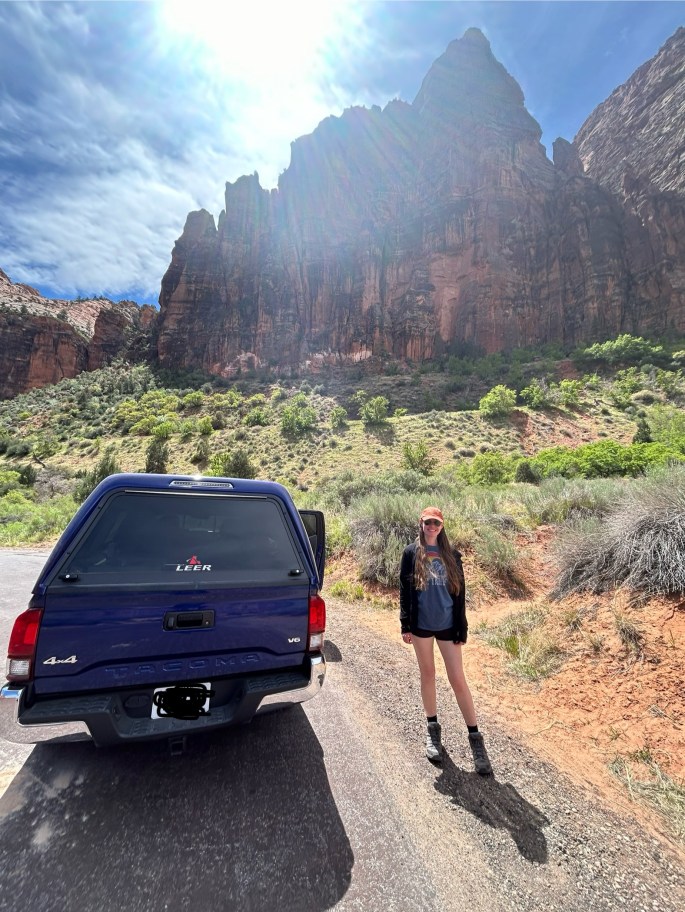
Traveler with Toyota Tacoma in front of Zion red rock cliffs

Zion’s red rock cliffs are breathtaking, even from the roadside.

How to Drive Through Zion (Even When Shuttles are Running)

Zion Canyon Scenic Drive is closed to private vehicles when shuttles are running. Due to the enormous number of visitors to the park, a shuttle system is used to ensure as much access as possible. Most years the shuttles run from March to November, and for the holidays near the end of December. When I visited in April, this road was closed, and I couldn’t access that portion of the park. That means I missed out on famous sights such as the Narrows and Angels Landing.

Zion National Park road winding through red cliffs under blue sky

Even if you can’t drive through the whole thing, the views are still jaw-dropping.

Even when the shuttles are running, you can still drive through on the Zion-Mt. Carmel highway, the Zion-Mt. Carmel tunnel, Kolob Terrace Road, and Kolob Canyons Scenic Drive. While the tunnel accommodates most vehicles most of the time, oversized vehicles may need to apply for a special permit. I drove through the tunnel and it was very cool!
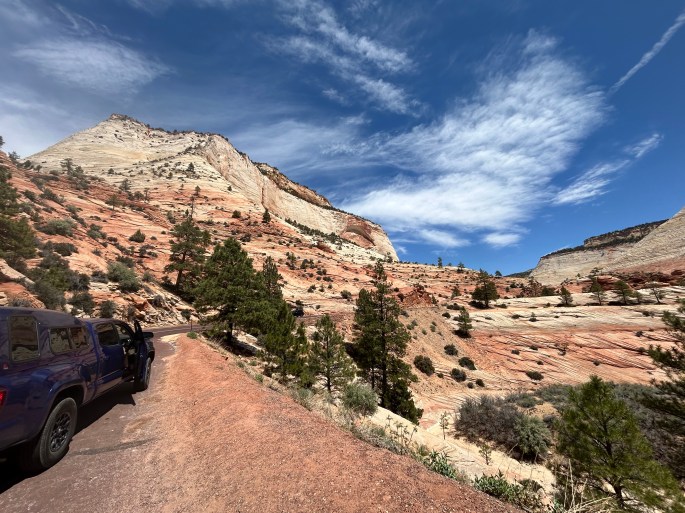
Zion National Park road winding through red cliffs under blue sky

Pull-off views like this make the drive unforgettable.

Visiting Zion with a Dog

Zion is not the easiest park to traverse with a dog. Like most national parks, dogs aren’t allowed in a majority of the park. They’re also not allowed on shuttles, so a whole section of the park is off-limits if you bring your furry friend.

Dogs are usually allowed in areas around national park visitor centers, and the same is true for Zion; dogs are allowed on the paved Pa’rus Trail that you can access from the visitor center. However, as Zion is an extremely popular destination, it can be difficult to even find a place to park at the visitor center to let your pup run around a bit. Beatrix and I finally did find a spot at the visitor center, but it was at the end of our excursion, after we’d already driven around most of the park. I stopped in briefly and picked up a park patch.

Zion Canyon Visitor Center building with red rock backdrop

Worth a stop if you can find parking!

I love a national park that allows you to see much of its beauty on a drive through. That’s probably the thing I value most when traveling with a dog. Another Utah-area park that I think is even better than Zion for driving through with a dog is Bryce Canyon. You can drive to almost any area in the park, and there are dozens of pull offs with gorgeous views. When I visit places like that, I tend to leave Beatrix in the truck, running with the air conditioner on of course, and dash out for some quick pics.

Selfie at Bryce Canyon, overcast skies

A rainy day during my visit in 2024 made Bryce Canyon even moodier and more magical.

Because I could only drive through some of Zion, I felt like I was missing out on a lot of what the park had to offer, and it’s on my list as a park I’d like to visit in the future if I’m making some dog-free trips. Still, if you’re in the area, and especially if you have a park pass, it’s definitely worth stopping by and checking out the majesty this place has to offer.

Where to Camp Near Zion

Camping is available within the park, but it can be difficult obtain a reservation, especially in peak season. If you’re like me, you’re always on the lookout for some free camping on BLM or National Park land anyway. Something I noticed as I approached the entrance to Zion were all of the boondockers parked throughout the beautiful lands surrounding the park. If I return, I’m definitely going to find some free camping in the area. The park’s boundaries certainly don’t enclose all of the unique beauty of the area, and there are plenty of quiet, scenic spots to camp outside the park boundaries.

Final Thoughts

Even though I couldn’t access the whole park with my dog, Zion’s drive-through beauty made it worth the visit. Next time, I might come back dog-free to hike The Narrows or Angel’s Landing…but for now, it’s a must-stop if you’re road-tripping through southern Utah.

How I Made My Tacoma Cooler with Tint…Literally

When I purchased my 2022 extended cab Toyota Tacoma, one of the first things I noticed was how blindingly bright it was inside the cab. Seriously, we’re talking surface of the sun here.

Me, trying not to get a sunburn.

Since Beatrix and I are planning lots of road trips, I knew I had to do something to control the temperature inside the truck and reduce the glare. Tinting the windows seemed like the perfect solution: cooler temps, more comfort, and some added privacy. So, I started researching Toyota Tacoma window tinting. First, I had to decide how much tint I needed. Car window tinting is measured in visible light transmission (VLT) percentage. These are the most common percentages to think about if you’re considering your Tacoma window tint options:

How Dark Should You Go?

70% VLT: 70% of light passes through the window tint. A super light tint that’s barely visible.

50% VLT: 50% of light passes through. It’s noticeably darker, but still pretty mild.

35% VLT: 35% of light passes through. This is ultimately what I went with; dark enough to reduce glare and heat, but not so dark my vision at night is obstructed.

20% VLT: Only 20% of light passes through, so this one is very dark. Think, tinted enough to make you feel mysterious.

5% VLT: Only 5% of all light passes through. This is limo tint and you can’t see in at all. Kind of tempting for privacy, but I knew I’d have a hard time seeing at all at night!

Be sure to check your state laws regarding window tint percentages, as every state is different in what is allowed!

Why 35% VLT was the Best Tint for My Tacoma

After some back and forth, I decided that 35% was the sweet spot for my Tacoma. It reduces heat and glare, adds privacy, and I’m not gonna lie, makes the truck look pretty sick. I considered going darker for privacy, but I wanted to make sure I could still see out at night without feeling like I was driving blind.

My Toyota Tacoma, Before and After Tinting

Here’s the truck before:

Before and after window tinting on Toyota Tacoma

You can see all the way through the front windows! Less than ideal for sneaking snacks at a red light.

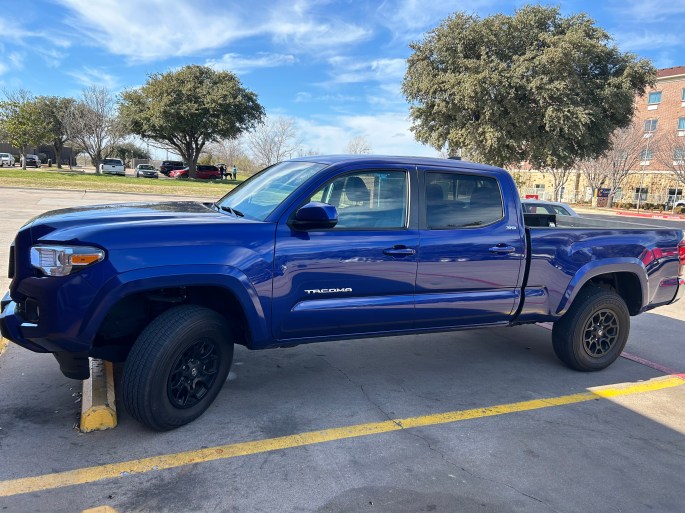
Here’s the truck after:

Toyota Tacoma with 35% window tint side view

Now we’re in stealth mode.

My Final Thoughts

I’m thrilled with how it turned out! Choosing 35% tint was the perfect balance between comfort, style, and visibility. If you’re considering Toyota Tacoma window tinting or wondering which tint level to choose, 35% might be the sweet spot for you too. No more squinting, and the cab feels way cooler (literally and figuratively). And most importantly, it’s Beatrix-approved.

Thinking about tinting your Tacoma? Drop a comment with your VLT choice or any questions! Do you think I made the right call?

The Most Important Red and Green Flags to Keep in Mind When Buying a Car Online (Part II of my saga)

If you read Part 1 (How I Almost Committed to the Wrong Truck and the Lessons I Learned), you know my first online truck purchase turned into a nightmare…bad brakes, leaking power steering, a rusted exhaust. I was days away from getting stuck with a $5,000 mistake. Thankfully, I was able to utilize Carvana’s test-drive period and return the vehicle. I still needed a truck, but I didn’t want to get burned again.
So how did I make sure my next truck was a winner? I learned to spot the biggest red flags and green flags when buying a car online. Here’s what you need to know so you don’t get burned like I almost did.

Top 3 Red Flags:

Red Flag Number 1: Multiple Owners

If a vehicle has changed hands every year or two, that could be a warning sign that something’s wrong. During my second search I found a cool truck that fit a lot of my specifications, but the last owner only had it for about a month before it was sold again. This didn’t automatically mean something was wrong, but it raised a red flag. Why did the last owner ditch it after just a month?

I was looking for a truck that had, ideally, only one owner. Always check the Carfax report to see how many times a vehicle has been bought and sold.

Red Flag Number 2: Prior Accidents, Even Minor Ones

The first truck I bought had been in a minor accident and was under a recall notice according to the Carfax report. Even a minor accident can hint at deeper issues. Did the previous owner neglect maintenance? Was it patched up cheaply? It doesn’t always mean you shouldn’t buy it, but it is something to keep in mind.

Red Flag Number 3: Body Damage

The damage my first truck had-dented splash guard, some scratches on the side, bent tow hitch-indicated it might have been driven hard and treated poorly. Again, body damage on its own isn’t necessarily a deal breaker, but keep it in mind as part of your overall evaluation.

Now, onto the Top 3 Green Flags!

Green Flag Number 1: A Single Owner

When I found my 2022 Tacoma, I was pleased to see it only had one owner. This truck had not been passed through multiple hands. Single-owner trucks are surprisingly rare, especially used Tacomas. Many have been passed around, so finding one with just one owner was a big deal. It’s more likely in a new vehicle, of course, and it makes sense that a 2022 only had one owner as opposed to the older 2019 I had to return for all of its mechanical issues. But I wanted my next truck to only have one owner, and I’m glad I didn’t compromise on that value.

Green Flag Number 2: Consistent Service Record

This is where the Carfax report can really come in handy. My truck got every oil change done at the dealership. The prior owner brought it in for all of its regular maintenance and mileage-based inspections. In my opinion, this makes it a whole lot more likely that an owner who was getting all of the scheduled maintenance and taking it to the dealership for oil changes was babying this truck, which is what you want when purchasing a used vehicle.

Green Flag Number 3: A Good Inspection Report From a Trusted Mechanic

I brought my second truck to the same mechanic who had diagnosed all the issues with the first one, and he gave it a clean bill of health. “This is a solid purchase,” he told me. “This is a beautiful truck.” Most mechanics will inspect a used vehicle for fee; I paid about $170, and every dollar was worth it.

And this time, I got a winner.

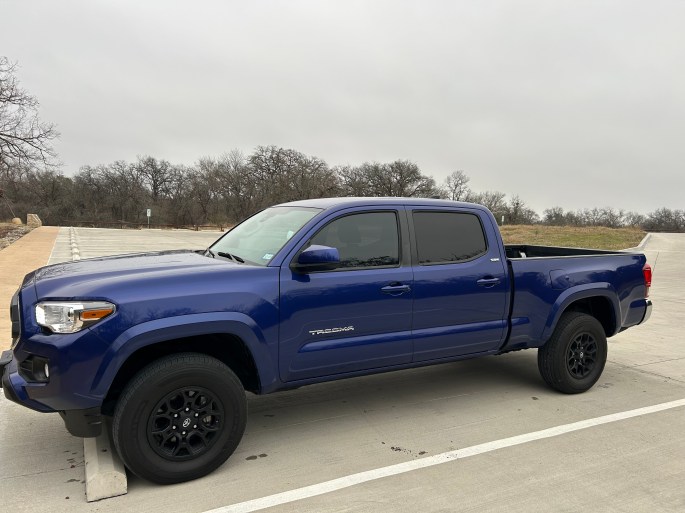
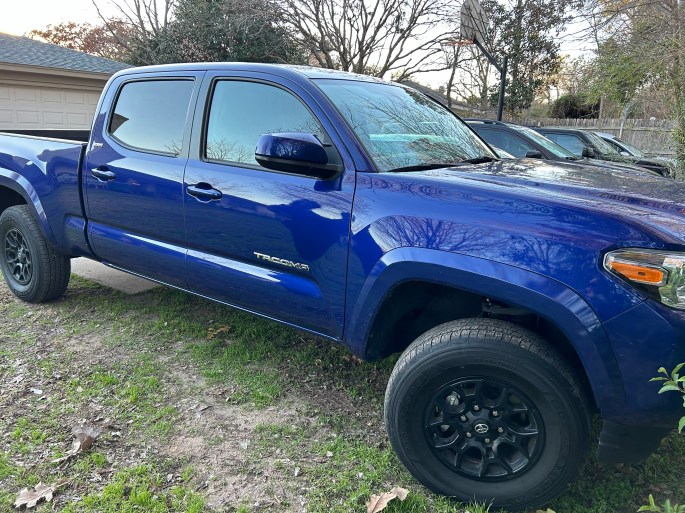
Isn’t she lovely? Isn’t she beautiful?

In the end, patience and a little bit of knowledge helped me find the right truck. Have you ever bought a car online? What red or green flags did you run into? Drop a comment below as I’d love to hear your experiences!

How I Almost Committed to the Wrong Truck…And the Lessons I Learned (Part I)

Buying a car online? Sounds risky, right? That’s exactly what I thought when I decided to purchase my dream truck through Carvana. Turns out, I was right to be cautious—but not for the reasons I expected. In fact, I almost ended up with the wrong truck entirely.

Spoiler alert: I eventually found my perfect vehicle, but not before making some mistakes, dealing with stress, and learning some hard lessons along the way. Here’s what happened when I almost committed to the wrong truck, and the biggest lessons I learned in the process.

Buying a vehicle online is a weird experience. I had my doubts, but Carvana’s process seemed convenient and straightforward, and ultimately, I found my perfect truck. But before I drove off from the Carvana vending machine in my dream vehicle, I had a near-disaster with my first choice.

We’ll get to that in a minute. First, here’s what I learned about buying from Carvana.

There are one major upsides of buying from Carvana: The 7-Day Test Drive

One of Carvana’s biggest selling points is their seven-day test drive period. Basically, you have seven days from the date you pick up your vehicle to decide if you want to keep it. You can return it for any reason, whether it’s too big, too small, has uncomfortable seats, whatever.

But for me, the best reason to return a vehicle? If it’s a mechanical disaster. Which, unfortunately, is exactly what happened with my first truck.

My First Truck: A Costly Mistake Waiting to Happen

The first truck I bought from Carvana was a 2019 Toyota Tacoma access cab. It had 52,000 miles, had been in a minor wreck, had two prior owners, and was under a recall notice. But, it looked cool! It had a sweet storage rack on top and some aftermarket lights. I was excited!

This is the only photo I have of that truck. I’m more prominently featured because I was having a rare excellent hair day.

Then, my son Hunter took one look under it.

“Mom, this thing is rough.”

He wasn’t kidding.

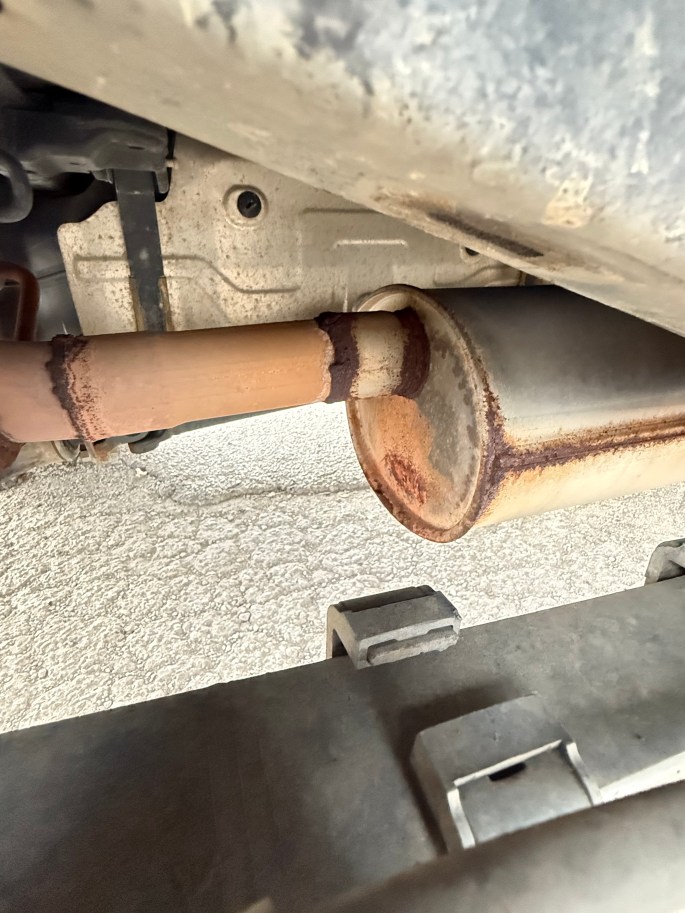
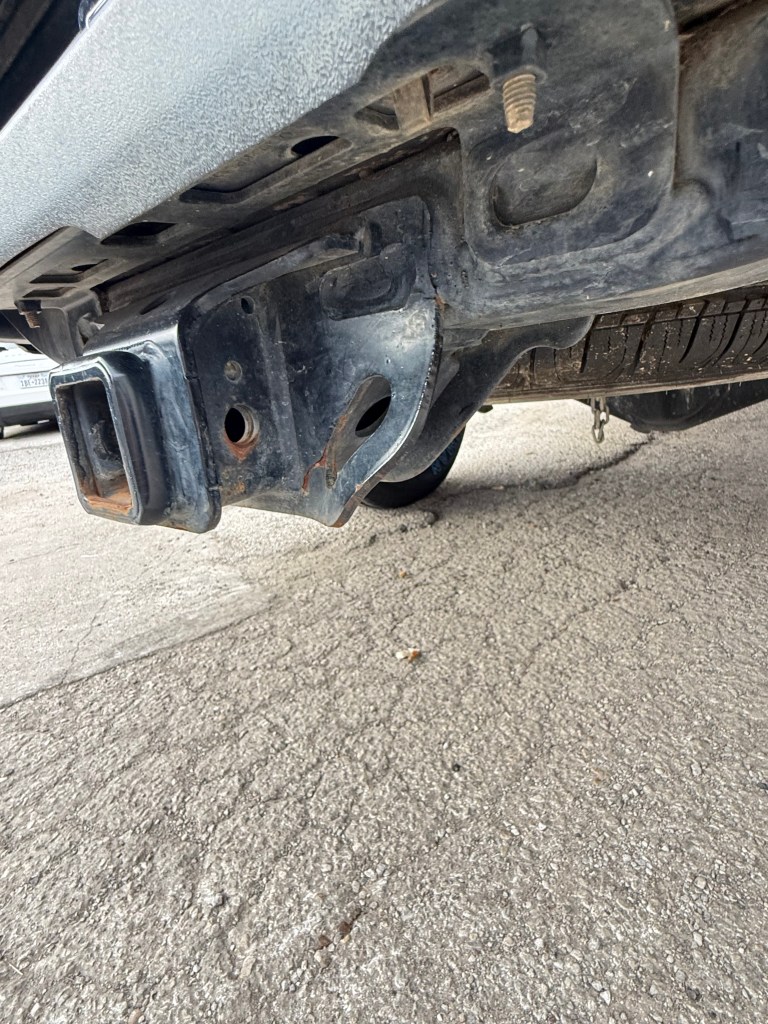
The muffler was rusty, and parts of the exhaust system had been welded in multiple places—never a good sign. The skid plate up front was bent, and the tow hitch was warped, as if, in his words, “an idiot wrapped some chain through there and tried to pull out a stump.”

Yeah, that was not great.

I took it to a shop that I trusted and paid for a used vehicle inspection. When it was complete, they gave me the bad news:

The rack and pinion assembly was leaking, the catalytic converter needed to be replaced, there was a hole in the rear exhaust and it was rusted out, and the power steering was leaking and the pump needed to be replaced. On top of that, the front brakes where completely wasted and needed to be replaced ASAP.

The estimated about $5,000 in repairs.

Some of the most visible damage.

I hadn’t even owned the truck for 72 hours.

Thankfully, I was still within Carvana’s 7-day test drive period.

I returned it immediately.

After licking my wounds for a few days, I hesitantly got back on the Carvana app. This time, I was determined not to rush.

Another big advantage of Carvana (and similar online retailers like CarMax) is that they give you access to vehicles across the entire country. You’re not stuck with whatever the local used car dealership has to offer. But that also means you have to be patient and really know what you’re looking for.

I started searching daily, even multiple times a day. I refined my search criteria, set alerts, and kept researching. I knew I wanted a long-bed Toyota Tacoma; I was going to build a mini camper in the back, so my 5’10” self needed the space. Four wheel drive and a V6 engine were essential, too.

I also learned a few crucial red flags to avoid—but more on that in Part II.

Then, after weeks of searching, I finally found it. A 2022 Toyota Tacoma extended cab in a beautiful deep blue. It had low mileage, clean history, no wrecks, and no major mechanical issues. It checked every single box. I knew immediately: This was my truck.

Returning that first truck was a wake-up call. I knew I had to be smarter, more cautious, and way more meticulous in my next search. And after a lot of trial and error, I finally figured out the biggest red flags to avoid and the best green flags to look for when buying a vehicle online.

Want to avoid making the same mistakes I did? Check out Part II—where I break it all down for you.

Have you ever bought a vehicle online? What was your experience like? Did you run into any issues, or did it go smoothly? Let me know in the comments. I’d love to hear your thoughts!

Read Part II: The Most Important Red & Green Flags to Keep in Mind When Buying a Car Online