Joshua Tree National Park During the Shutdown

Recap: After a lot of consideration, I decided to visit Joshua Tree National Park with my dog during the 2025 government shutdown. Here, I discuss what the park is like and how to determine whether visiting national parks right now is right for you.

Visiting a National Park During a Government Shutdown

I realize that visiting a national park during a government shutdown can be a controversial decision. There are reasonable arguments why you shouldn’t do so. Many argue that visiting during a shutdown can lead to overflowing trash, damaged resources, and unsafe situations because staff aren’t being paid or are working limited hours.

I typically drive through parks rather than hike off of the main roads since I travel with my dog, and I would never take her anywhere dogs aren’t allowed. I am used to packing up my own trash from camping, so if trashcans weren’t available, I would never leave my trash in a park. I would be prepared for the possibility that facilities wouldn’t be open. I made the decision to go, as I had been planning a fall visit to Joshua Tree all year, and I determined that I would not be putting myself in unnecessary danger or harm the park in any way.

Here are some things to keep in mind if you visit a national park during the shutdown:

  • Facilities may not be open at all, so figure out a plan for your basic needs of food, water, and restrooms. You can find my favorite product for peeing on the go in this post here!
  • Have trash bags and be prepared to pack your trash out, not leave it behind.
  • Don’t break the rules. Don’t go off trail. Don’t take your dog places where they aren’t allowed. Don’t poach people’s campsites (I discuss more about dogs in the park and the reservation system below).
  • Be kind. If you see park rangers, realize that this is a challenging time and they may be working without pay. Be polite and grateful to be there.

With these things in mind, I set out to explore Joshua Tree in mid-October 2025.

Joshua Tree during a shutdown

Although entry fees aren’t being collected, the entrance gates were staffed, and rangers were available and friendly. It really felt like business as usual. All of the park rangers I spoke to were very friendly and helpful.
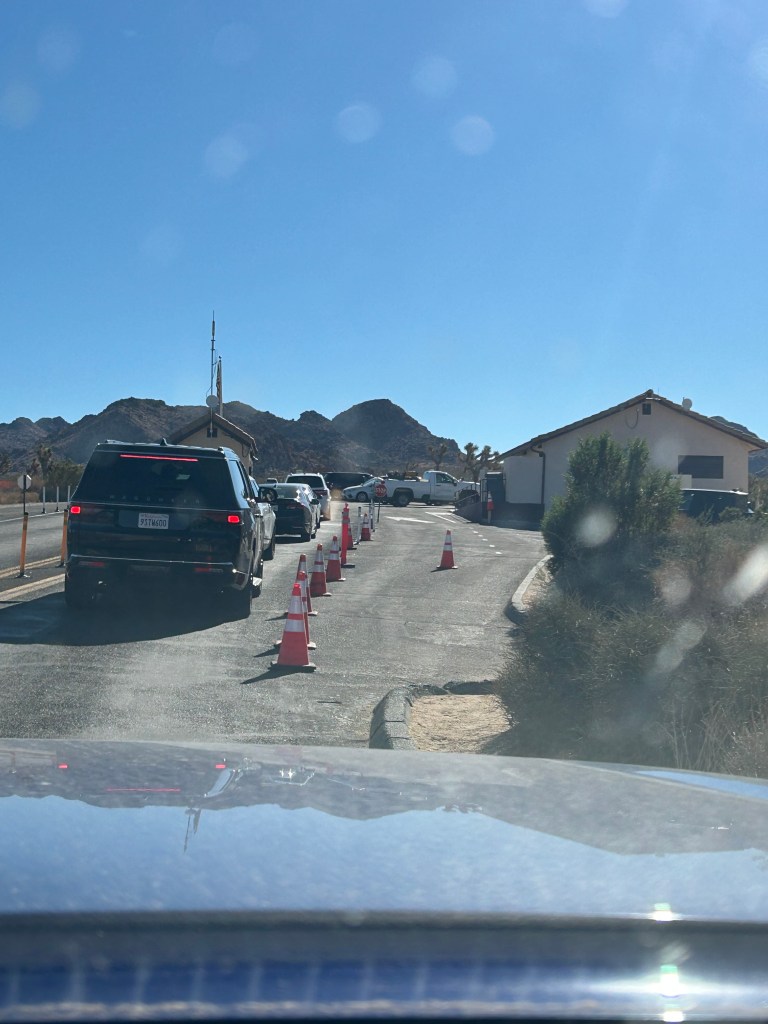
The line ahead and behind me to get in. Please ignore my criminally dirty windshield.

The campgrounds are open. You can still make reservations through recreation.gov, and by all accounts, pit toilets are clean and maintained, and trash is being emptied. I stopped at a couple of restrooms during my drive through the park and they were all clean with plenty of toilet paper.

Joshua Tree was active when I visited on a Friday morning. There were plenty of people enjoying the scenic views as well as camping and hiking throughout the park. I noticed quite a few international visitors, a reminder that this park draws people from all over the world.

park fees

As I mentioned, no fees are collected during a shutdown. This can be incredibly detrimental for the parks as they have millions of visitors every year and require tons of care and upkeep. Without entrance fees, maintenance and conservation efforts can quickly fall behind. If you visit a park during a shutdown, consider donating to a non-profit that benefits the park, such as the Joshua Tree National Park Association (link). The visitor center near the west entrance remained open, with restroom facilities and plenty of cute merchandise available. Consider supporting the parks by purchasing something or making a monetary donation to the Joshua Tree National Park Association.

history of the park

Joshua Tree became a national park in 1994 after being protected as a national monument in 1936. Named after the iconic Joshua Trees that populate the park and surrounding area, the park covers parts of the Mojave Desert and the Colorado Desert. Joshua Trees are a delicate part of the ecosystem and face threats due to climate change such as increasing temperatures and decreased rainfall in the area.
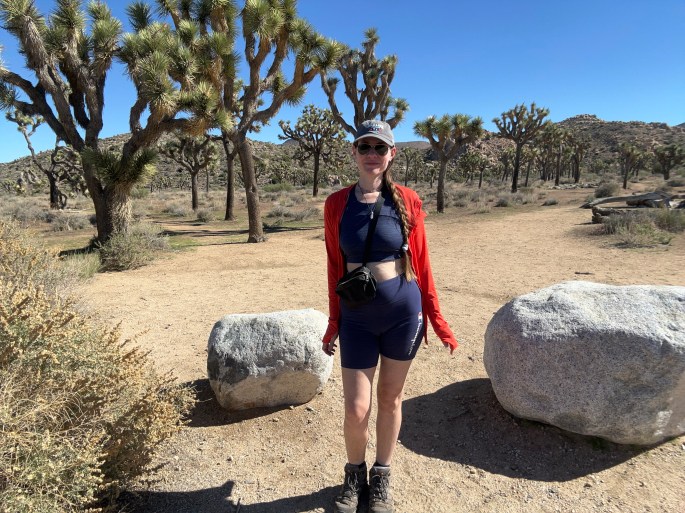
A woman standing among the Joshua Trees at Joshua Tree National  Park during the shutdown

Among the famous Joshua Trees

The area encompassing the park has a history of mining operations for copper, zinc, iron, and gold. A wealthy resident of the area, Minerva Hoyt, petitioned the government to protect the area, leading to its eventual designation as a national monument.

my visit to the park

A woman at Joshua Tree National Park during the government shutdown

Yeah, I couldn’t stop taking pics with the Joshua Trees

When I visited the park, I came in through TwentyNine Palms and the west entrance. Even simply driving through the area exposes you to otherworldly desert beauty. There are rocky formations among the trees and many people come to the area to rock climb.

keys view

I drove to Key’s View which overlooks the Coachella Valley and Palm Springs. This was an incredible view, and is a great spot for stargazing in this Dark Sky Park. There are several parking spaces and it’s just a short walk to the viewpoint.
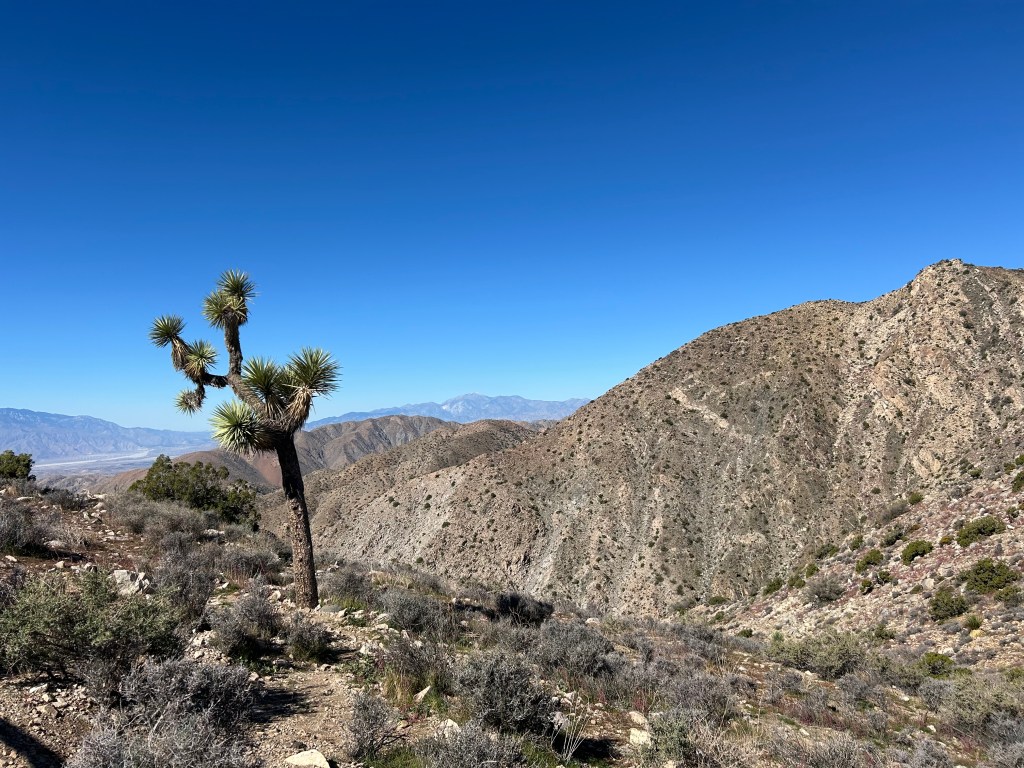
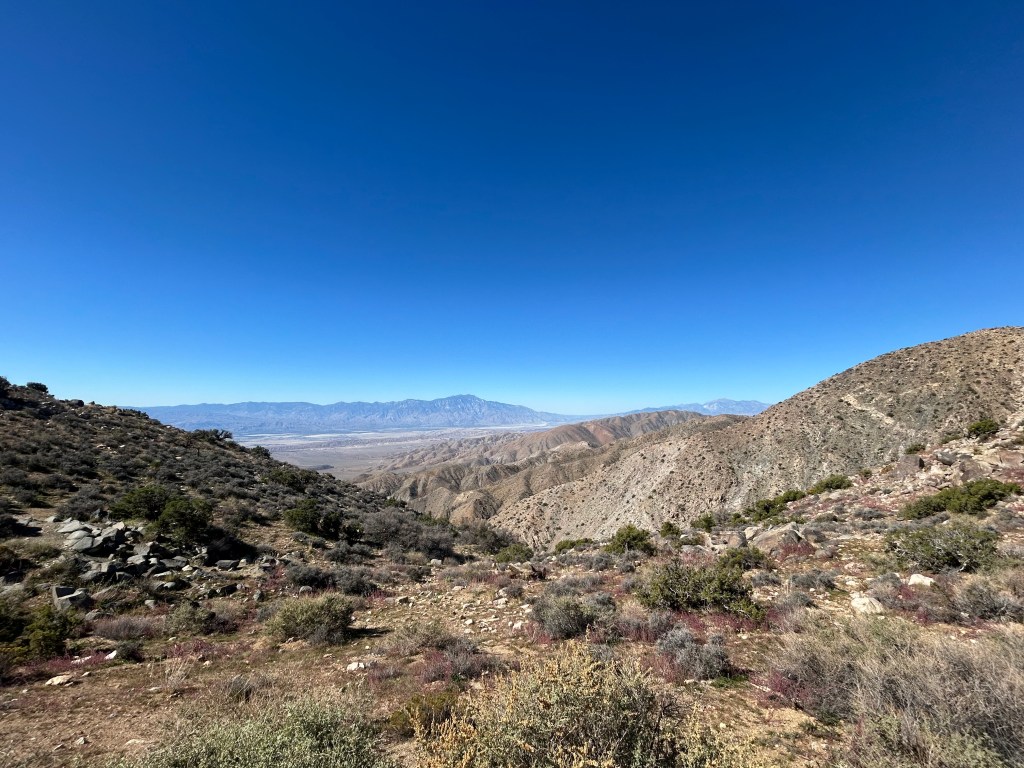
Keys View is magnificent!

cholla cactus garden

I continued driving into the southern area of the park that consists of the Colorado Desert and found one of my favorite areas of the park, the Cholla Cactus Garden. They’re just so cute and fluffy-looking, although you do NOT want to touch them! Apparently it’s very easy to get the painful spines stuck in your skin! There’s a parking area and a short trail leading through the cactus garden so you can wander among them.
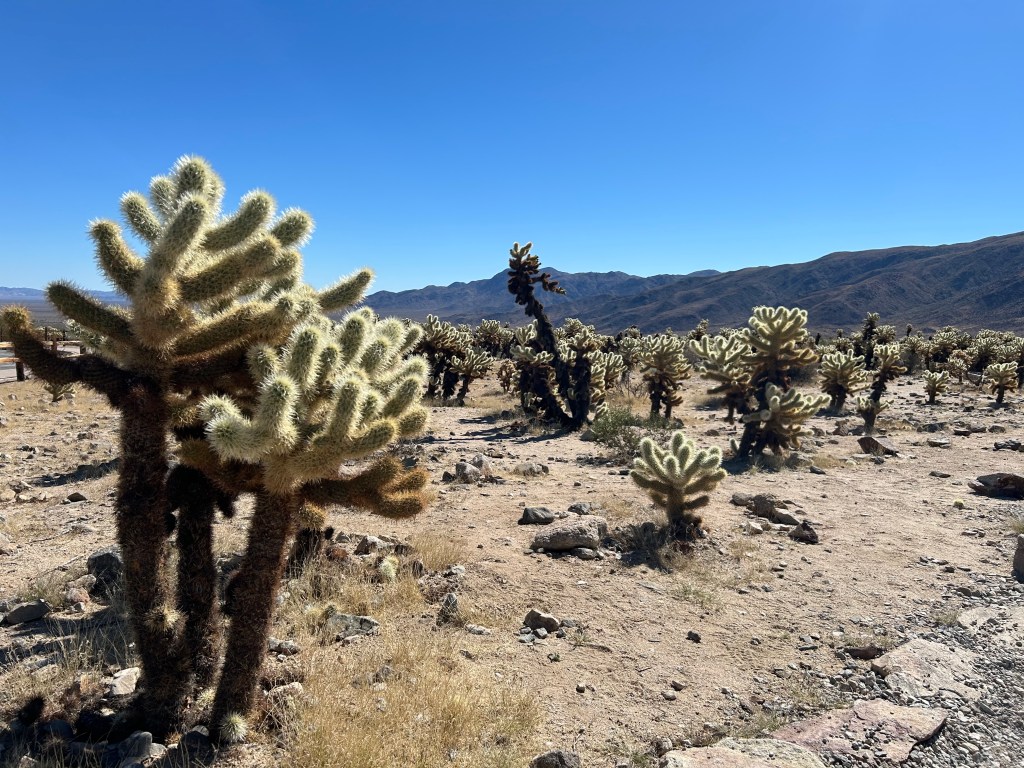
See, they’re so cute!

Selfie at Cholla Cactus Garden at Joshua Tree National Park during the government shutdown

Repping the Texas State Park hat wherever I go

dogs in the park

Like most national parks, Joshua Tree isn’t very dog-friendly. Dogs aren’t allowed on trails or in the backcountry. They’re limited to roads, parking areas, and campgrounds, and must stay within 100 feet of those areas while on a leash. I kept Beatrix in the truck with me while I drove through the park. Of course, she hardly minds napping while I drive through these beautiful places.

outside the park

There are other places you can see the Joshua Trees outside of the park, like Mohave National Preserve. I drove through part of the preserve on my way to the park, and it was beautiful and contained many Joshua Trees. Beatrix and I stayed for two nights at the Joshua Tree Lake RV and campground which is only about a 10 minute drive from the park’s western entrance. With its bathrooms, showers, dog park, RV hookups and plenty of spaced out tent camping spots, we loved staying there. It just has a friendly, funky desert vibe and I’d definitely stay there again if we go back.
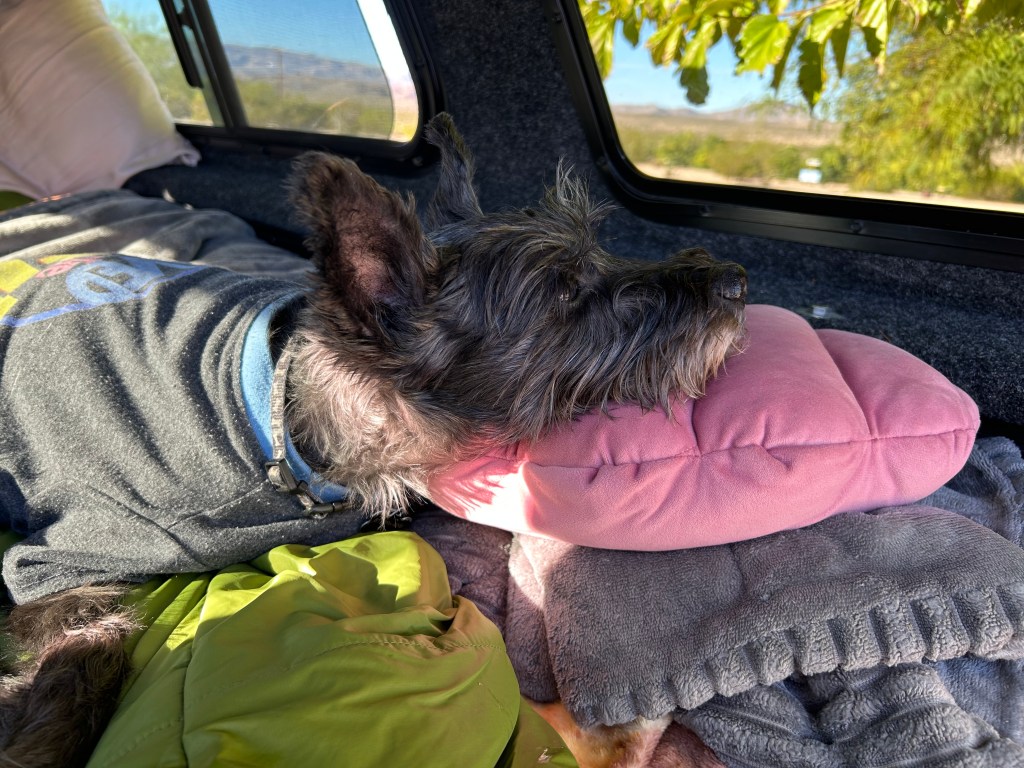
She loves lying on pillows like this

A mile or so past the Joshua Tree Lake campgrounds you can stop and see a sculpture called “Transmission.” It’s on private land, but there is a little fenced off public path where you can get closer to take pics. It’s weird and cool, which definitely fits the Joshua Tree vibe.
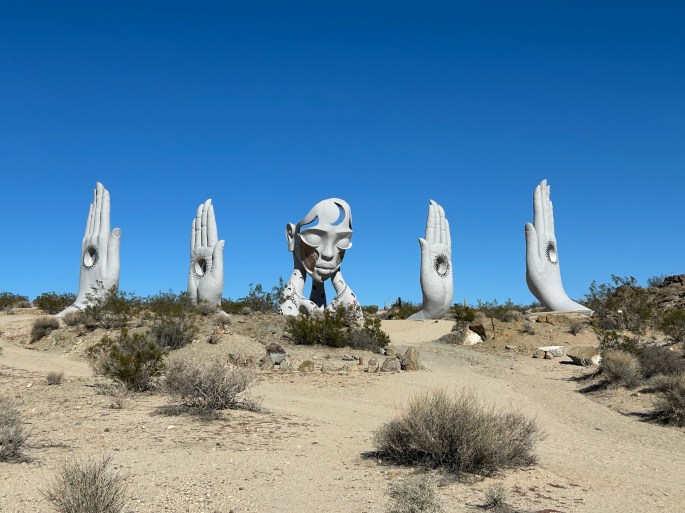
Transmission sculpture near Joshua Tree National Park

A cool bit of desert weirdness

Visiting a national park during the shutdown is a personal choice, and for me, it was worth it. I’m glad Beatrix and I checked this park off of our list. If you decide to visit as well, please keep in mind how important it is to follow the rules to preserve these fragile ecosystems, and consider donating to ensure the funds are there to do so.

National Park Roundup: Driving Through Death Valley

Recap: I visited the country’s hottest and driest national park on a road trip with my dog, driving through miles of desolate, flat desert surrounded by mountain ranges. You can read about my experiences at Zion National Park with my dog here.

History

The national park, covering areas of California and Nevada, stretches over 5,000 square miles of the vast Death Valley. It was designated as a national monument in 1933. At that time the area contained the homeland of the Timbisha Shoshone Tribe, and a reservation was not designated for these people until 1982. Death Valley gained national park status in 1994.

The “Death” in Death Valley

Death Valley gets its spooky name from gold rush pioneers heading to California who thought the area would be their tomb in the winter of 1849. When they were rescued and leaving the area, one of them apparently said, “Goodbye, Death Valley,” and the name stuck.

People have lost their lives in the park, with the most common reason being vehicular accidents, and some people have lost their lives due to heat exposure. Temperatures in the hottest place on earth can soar as high as 120 degrees Fahrenheit, with the record high temperature reaching 134 degrees Fahrenheit.

Death Valley National Park thermometer

When I visited in April, it was only a cool 87 degrees.

Death Valley National Park Furnace Creek Visitor Center

Furnace Creek Visitor Center

Driving Through

Death Valley is a great national park for driving through. Its unique desert landscape stretches for miles, crossing some of the west’s most remote areas.

I entered Death Valley from the east, driving in from Las Vegas through Pahrump and Death Valley Junction, then continued west through Furnace Creek and Panamint Springs on my way to Bishop, California, which I wrote about here.

One famous site is Badwater Basin, which is 282 feet below sea level, consisting of nearly 200 square miles of salt flats made up of salt, calcite, gypsum, and borax. Tens of thousands of years ago this was the site of the ancient Lake Manly, which is now completely evaporated, leaving behind the Badwater Basin.

One of the most popular spots in the park to stop and take in the view is Zabriskie Point. This location is where you can access the start of the Badlands Loop Trail from the parking lot. I had initially put Zabriskie Point on my list to check out, but as I approached the area, I decided to just drive on past. It was pretty crowded, with a line of cars going in and out of the parking lot, and it was crawling with tourists. Not that I have anything against tourists…I realize that most places I go, I’m the tourist! But sometimes when I’m in the middle of a road trip like I was here, the thought of getting to my next stop is all the mental energy I have, and I just don’t want to take the time to futz with a busy crowd.

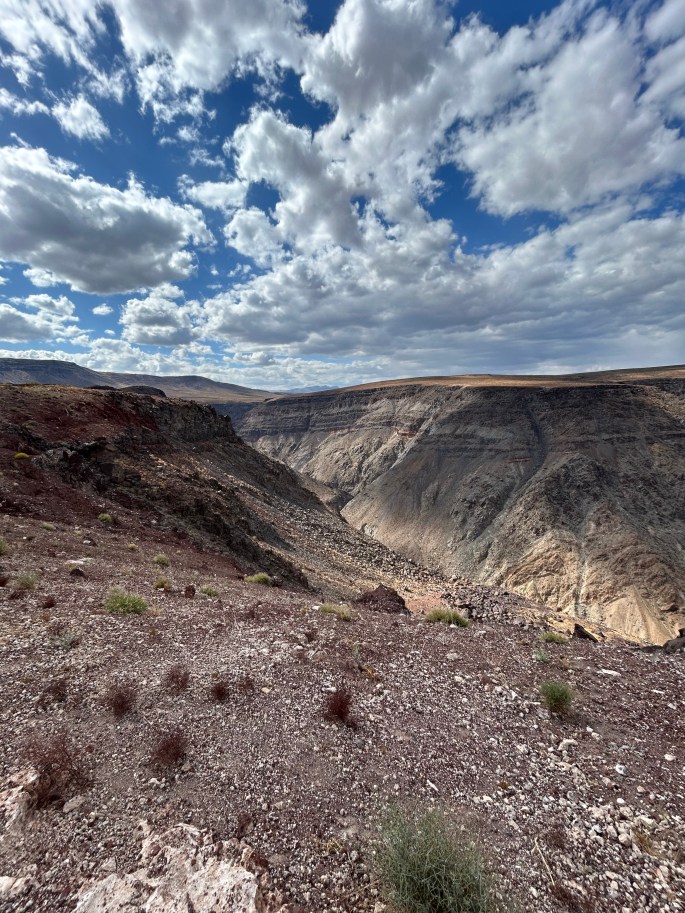
I did stop at the Father Crowley Vista Point with its views of Rainbow Canyon, where military fighter jets used to train. It’s located near the park’s western edge, overlooking Rainbow Canyon.

Rainbow Canyon at Death Valley National Park

Rainbow Canyon, also known as Star Wars Canyon, was once a training site for fighter jets.

Toyota Tacoma at Father Crowley Vista Point at Death Valley National Park

My traveling Tacoma at Father Crowley Vista Point.

Dogs

Pets are not allowed on any trail in Death Valley NP. There are no dog-friendly hikes available in Death Valley. That works for me and Beatrix, because she’s a little old lady who doesn’t really go on hikes and is content to be a passenger princess for the duration. But for many people who have active dogs, this is limiting.

Like all national parks, dogs are allowed on parking lots and paved roads only.

The National Park Service published this list of roads near popular Death Valley sites where you can walk your dog.

Death Valley was a memorable drive through some gorgeous country, and I’m glad I passed through on my way to continue my road trip west!

National Park Roundup: Exploring Zion with my Dog

Recap: I explored Zion National Park with my dog, drove the scenic roads, and was tempted to join the boondockers camping just outside the park.

A Little History

Zion National Park, Utah’s first National Park, was established in 1919 by President Woodrow Wilson after first being protected as a national monument. It’s one of the most popular national parks; according to the National Park Service, attendance has increased 90% since 2010. In 2021, more than 5 million people visited the park, which is an impressive milestone few national parks ever reach.

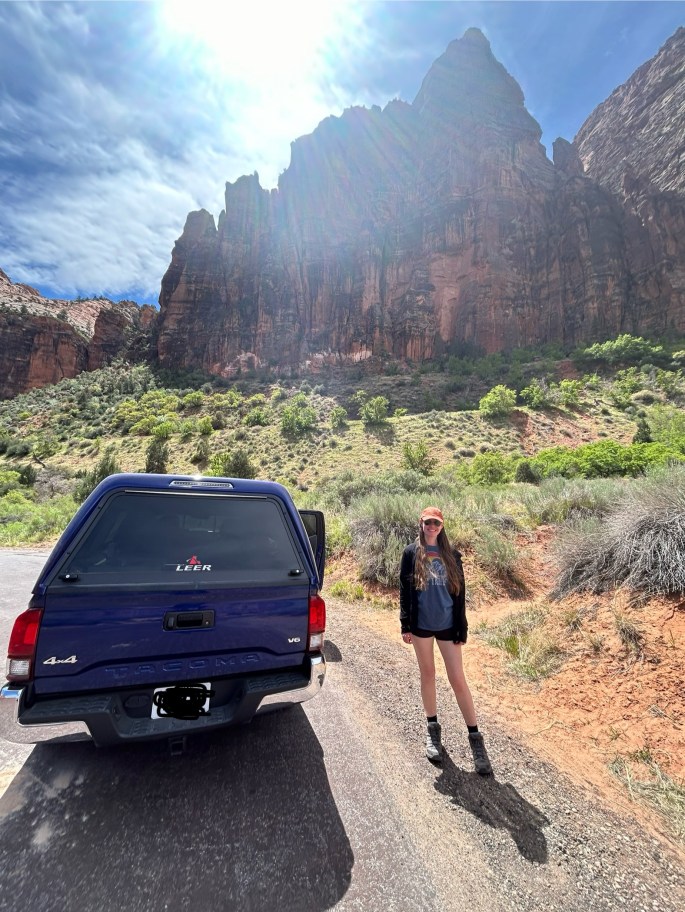
Traveler with Toyota Tacoma in front of Zion red rock cliffs

Zion’s red rock cliffs are breathtaking, even from the roadside.

How to Drive Through Zion (Even When Shuttles are Running)

Zion Canyon Scenic Drive is closed to private vehicles when shuttles are running. Due to the enormous number of visitors to the park, a shuttle system is used to ensure as much access as possible. Most years the shuttles run from March to November, and for the holidays near the end of December. When I visited in April, this road was closed, and I couldn’t access that portion of the park. That means I missed out on famous sights such as the Narrows and Angels Landing.

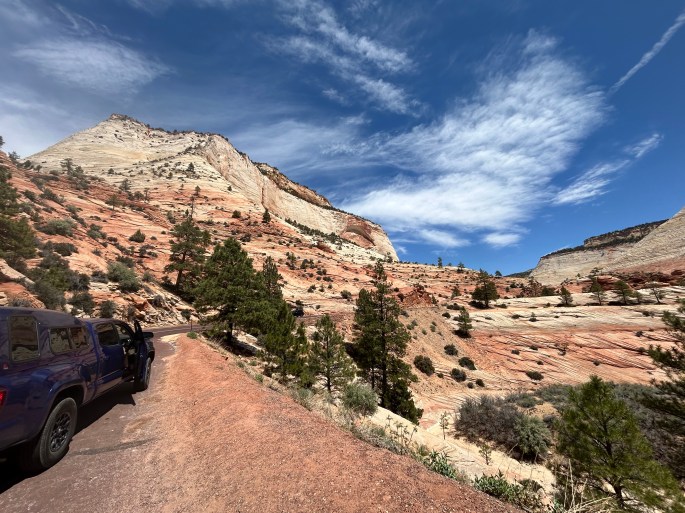
Zion National Park road winding through red cliffs under blue sky

Even if you can’t drive through the whole thing, the views are still jaw-dropping.

Even when the shuttles are running, you can still drive through on the Zion-Mt. Carmel highway, the Zion-Mt. Carmel tunnel, Kolob Terrace Road, and Kolob Canyons Scenic Drive. While the tunnel accommodates most vehicles most of the time, oversized vehicles may need to apply for a special permit. I drove through the tunnel and it was very cool!

Zion National Park road winding through red cliffs under blue sky

Pull-off views like this make the drive unforgettable.

Visiting Zion with a Dog

Zion is not the easiest park to traverse with a dog. Like most national parks, dogs aren’t allowed in a majority of the park. They’re also not allowed on shuttles, so a whole section of the park is off-limits if you bring your furry friend.

Dogs are usually allowed in areas around national park visitor centers, and the same is true for Zion; dogs are allowed on the paved Pa’rus Trail that you can access from the visitor center. However, as Zion is an extremely popular destination, it can be difficult to even find a place to park at the visitor center to let your pup run around a bit. Beatrix and I finally did find a spot at the visitor center, but it was at the end of our excursion, after we’d already driven around most of the park. I stopped in briefly and picked up a park patch.

Zion Canyon Visitor Center building with red rock backdrop

Worth a stop if you can find parking!

I love a national park that allows you to see much of its beauty on a drive through. That’s probably the thing I value most when traveling with a dog. Another Utah-area park that I think is even better than Zion for driving through with a dog is Bryce Canyon. You can drive to almost any area in the park, and there are dozens of pull offs with gorgeous views. When I visit places like that, I tend to leave Beatrix in the truck, running with the air conditioner on of course, and dash out for some quick pics.

Selfie at Bryce Canyon, overcast skies

A rainy day during my visit in 2024 made Bryce Canyon even moodier and more magical.

Because I could only drive through some of Zion, I felt like I was missing out on a lot of what the park had to offer, and it’s on my list as a park I’d like to visit in the future if I’m making some dog-free trips. Still, if you’re in the area, and especially if you have a park pass, it’s definitely worth stopping by and checking out the majesty this place has to offer.

Where to Camp Near Zion

Camping is available within the park, but it can be difficult obtain a reservation, especially in peak season. If you’re like me, you’re always on the lookout for some free camping on BLM or National Park land anyway. Something I noticed as I approached the entrance to Zion were all of the boondockers parked throughout the beautiful lands surrounding the park. If I return, I’m definitely going to find some free camping in the area. The park’s boundaries certainly don’t enclose all of the unique beauty of the area, and there are plenty of quiet, scenic spots to camp outside the park boundaries.

Final Thoughts

Even though I couldn’t access the whole park with my dog, Zion’s drive-through beauty made it worth the visit. Next time, I might come back dog-free to hike The Narrows or Angel’s Landing…but for now, it’s a must-stop if you’re road-tripping through southern Utah.

Desert Magic: Homolovi State Park and Route 66 in Winslow, AZ

One of my favorite road trip stops this year was Homolovi State Park and Winslow, Arizona. It’s fairly close to Petrified Forest National Park, which we visited as well, and Flagstaff, Arizona. Winslow is on the old Route 66 and is an adorable small town with lots of charm. It sits roughly an hour west of Petrified Forest and an hour east of Flagstaff, making it a perfect midpoint stop.

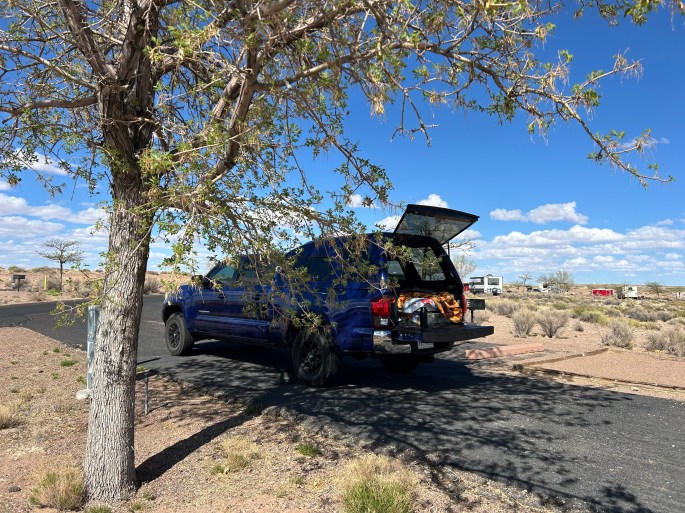
Beatrix and I checked in at Homolovi State Park on an April afternoon. The sun was shining brightly, but our camp spot was miraculously in the shade!

Toyota Tacoma parked under a small desert tree at Homolovi State Park campsite in Arizona

The traveling Tacoma makes it to Arizona!

We had a nice, slow afternoon, and I even realized the tent pad at our spot was the perfect place to put my yoga mat and do a little stretching. By that time we’d been on the road for a few days, and my body definitely felt it.

The weather was perfect in the shade, so Beatrix and I just kicked back and got some rest until it was time to make dinner.

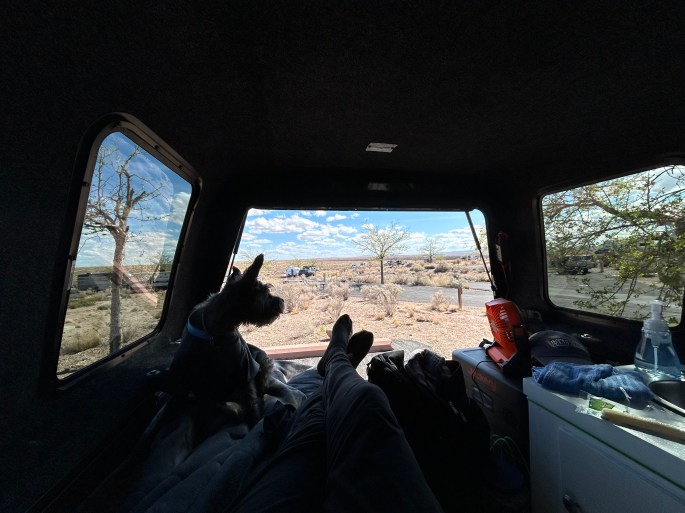
View from the back of a truck camper with a mini schnauzer resting inside and desert landscape visible through the windows

Enjoying the quiet and the desert landscape.

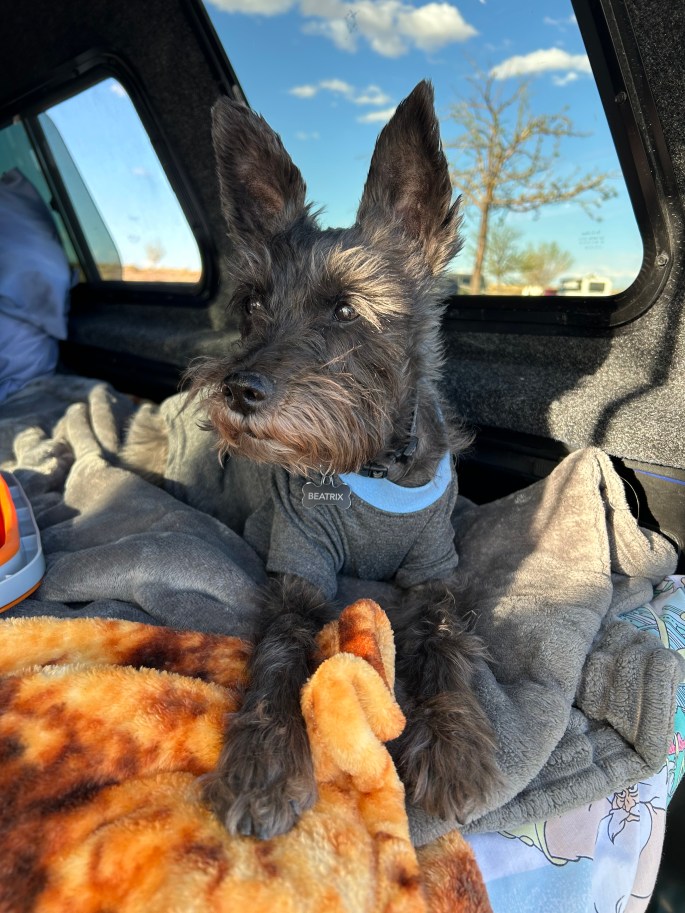
Mini schnauzer lounging in the back of a truck camper during a desert camping trip

Beatrix the mini schnauzer, camping goddess.

At first there weren’t too many other campers, but as it got close to evening, the campgrounds filled up and every spot was taken. I had made a reservation in advance, which I highly recommend for this park; it’s in demand.

There are some major upsides to campgrounds, such as a built-in sense of security (whether true or not) and access to trash and bathrooms. In fact, I usually try to get a spot really close to the bathrooms so I can easily take bathroom breaks and brush my teeth, even though I have a sink in my build. It helps save my water, and it’s always a plus when you can actually flush a toilet. But there are downsides, too. It did feel a little cramped with everyone in there, although most people really keep to themselves. But it can feel a little weird doing all my leg stretching yoga poses and downward dog in full view of like a dozen RVs.

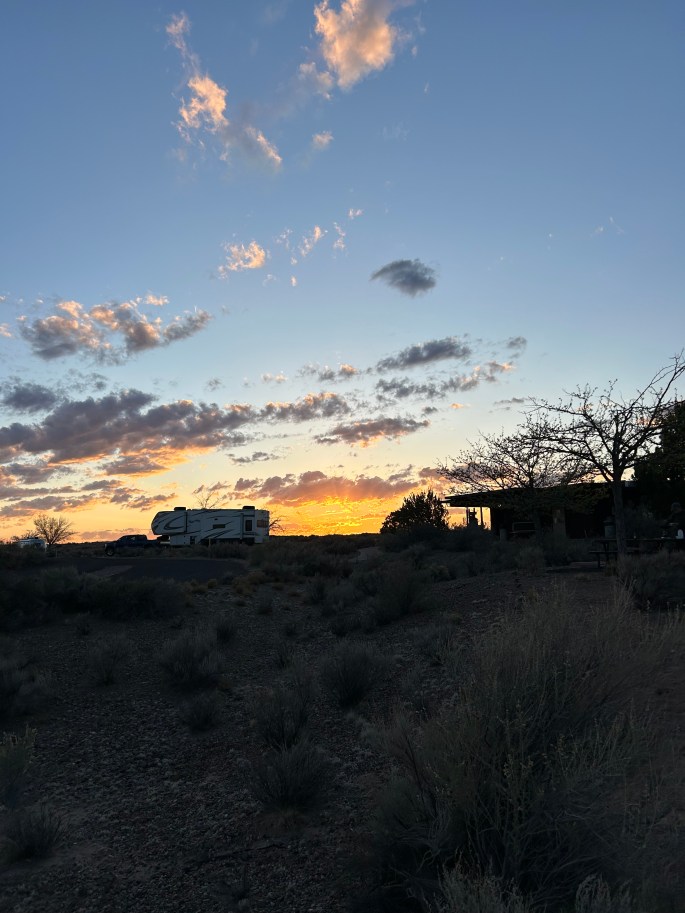
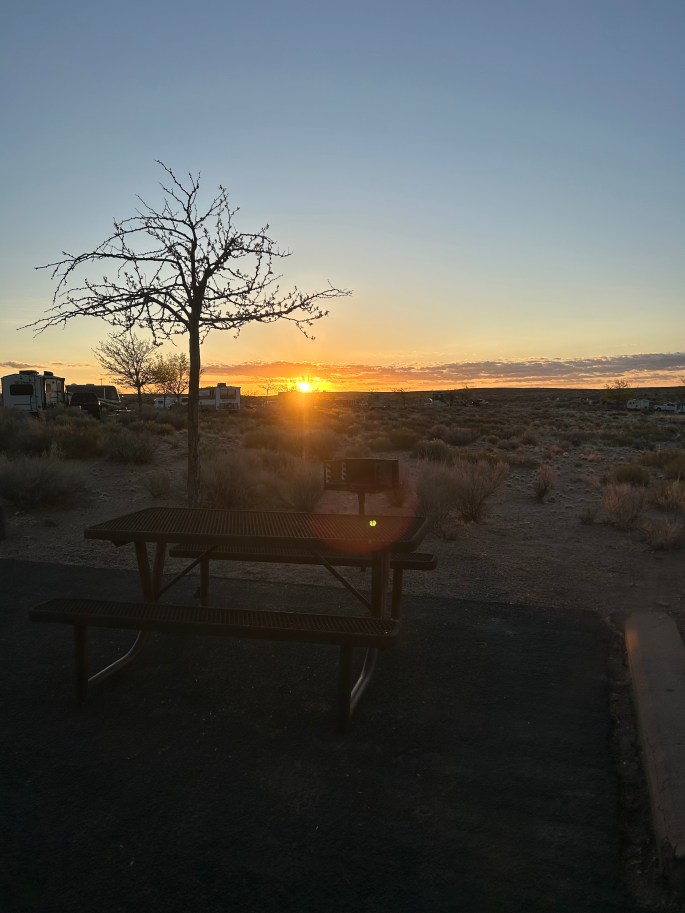
When sunset began, I was speechless.

Glowing golden sunset over the flat Arizona desert at Homolovi State Park

Just breathtaking!

I was really mesmerized by the bright golden light. There is something so beautiful about the flat, vast desert and the endless sky. I’ve always thought tall trees and mountains were my favorite, but doing some desert camping this year has made me change my mind. When it’s not oppressively hot, the desert is one of the most magical places to be.

The sunrise was gorgeous too! The sunlight poured into my truck.

Early morning desert sunrise casting warm light over Homolovi State Park campground

It really got me up bright and early!

There are two historical sites at Homolovi State Park featuring the ruins of native structures. According to the official Homolovi State Park website, “Homolovi” is Hopi for “place of the little hills.” The Hisat’sinom, or ancestral Puebloan people, migrated through this area on the way to join the people now known as the Hopi. This area is considered sacred to the Hopi.

I didn’t visit the ruins because my priority when I travel is Beatrix, first and foremost. I don’t like her to get out in the direct sun, and I try to minimize the time I just leave her in the car with the engine running as much as possible, especially in warm places like Arizona. But I’m also torn on seeing some of these things. I feel like such a colonizer tourist traipsing around the remains of a sacred place that was once the homeland of a thriving and ancient culture. Of course, I also think it’s important as a tourist to remember these places and sit with that discomfort as well.

Through the course of my traveling, I’ve realized that some of the most beautiful places I’ve visited are on the grounds of stolen land. I’ve been thinking about doing a deeper post just about that, so stay tuned.

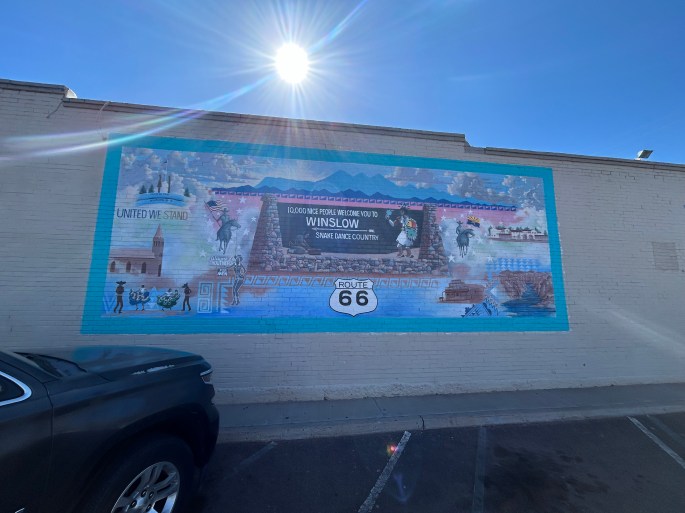
After leaving the state park, Beatrix and I stopped in at the little town of Winslow to get some gas. It’s a small, slow, cool little town, kind of like Bishop, California, which I talked about in my last post.

Mural reading “10,000 nice people welcome you to Winslow” painted on a brick building in Winslow, Arizona

Welcome to Winslow!

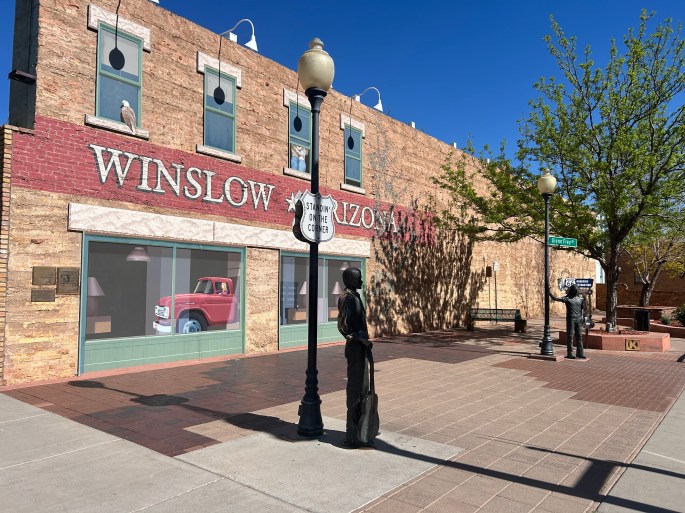
I noticed some signs for Standin’ on the Corner Park, from the famous line from the Eagles song, so I had to make a quick stop.

The “Standin’ on the Corner” statue and mural tribute in downtown Winslow, Arizona on Route 66

Standin’ on the corner in Winslow, Arizona.

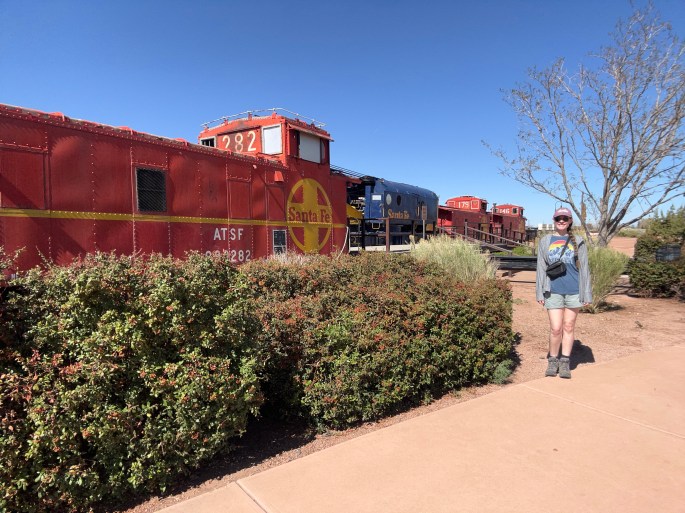
Right near the corner, I spotted a massive vintage Santa Fe train on display, so of course I had to grab a photo!

Traveler standing in front of a vintage Santa Fe locomotive on display in Winslow, Arizona

Classic train moment!

One thing I noticed while driving through all of that big, gorgeous Arizona desert was there are trains everywhere out there. Of course I had to take a pic in front of one when I could! After a peaceful night in the desert and a quick corner stop in Winslow, we were back on the road, next stop: Nevada.